




For years, I assumed adding cardio to a weight-training program would help my clients get leaner faster. They would burn more calories, improve their endurance, and continue building muscle. It sounded perfectly logical.
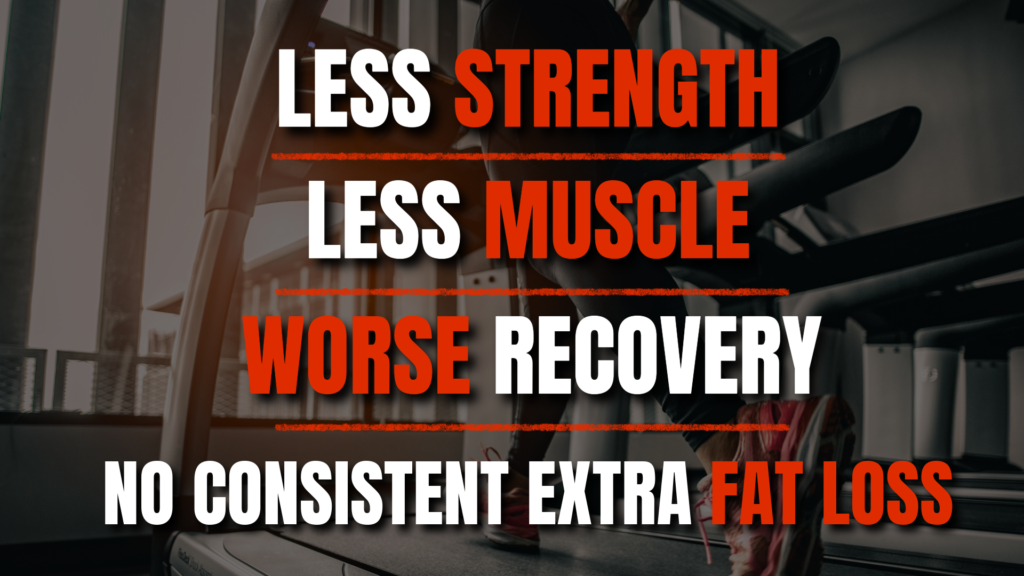
But after decades of coaching, I kept noticing a pattern I hadn’t expected. Clients who added dedicated, steady-state cardio on their recovery days could still make progress. Often, though, they didn’t progress as well as clients who recovered between their weight-training sessions. Their strength rose more slowly, their muscular development was less impressive, and I didn’t consistently see better fat-loss results.
That observation changed how I think about the question “Does cardio hurt muscle growth?” The answer depends on what you are training for, how hard you already train, and how well you recover.
The goal changes the answer
I’ve trained natural bodybuilders, marathon runners, triathletes, and endurance cyclists. It would make no sense to tell a marathon runner to stop running. Running is the goal. A cyclist needs time on the bike, and a triathlete needs to swim, cycle, and run.
In fact, some of the endurance athletes I’ve worked with have found that our short, demanding strength workouts helped their performance. One distance cyclist stopped cycling during his off-season and trained with me three times per week. When he returned to the road, his times improved. That’s his experience, not proof that cyclists should give up riding: the sport still requires practice.
Now consider someone with a different goal: “I want to build as much muscle as I can naturally while staying lean.” For that person, extra cardio is no longer practice for an endurance event. It is another training session that has to earn its place in the program.
What happened when my clients added cardio
My clients were already doing three short, extremely intense weight-training workouts per week. They were getting stronger, building muscle, and improving their body composition. Then some would add a run, a stationary-bike ride, or an elliptical session on a day they otherwise would have used for recovery. Sometimes it was only around 20 minutes.
I expected more exercise to produce more fat loss. Yet the clients adding these steady-state sessions often seemed to gain strength and muscle more slowly. Many didn’t become noticeably leaner faster, either.
I want to be careful about what that means. These were observations from coaching, not a controlled experiment. Differences in diet, sleep, training history, and other habits could have contributed. I also saw plenty of people combine cardio and weights successfully. The useful lesson is to pay attention to the result of adding another session, rather than assuming that more exercise must improve it.
Why my weight-training sessions matter to this question
My Naturally Intense High Intensity Training workouts usually last about 10 to 20 minutes, three days per week. The sessions are brief because the effort is high: very little rest between sets, challenging weights, and work taken to or near momentary muscular failure.
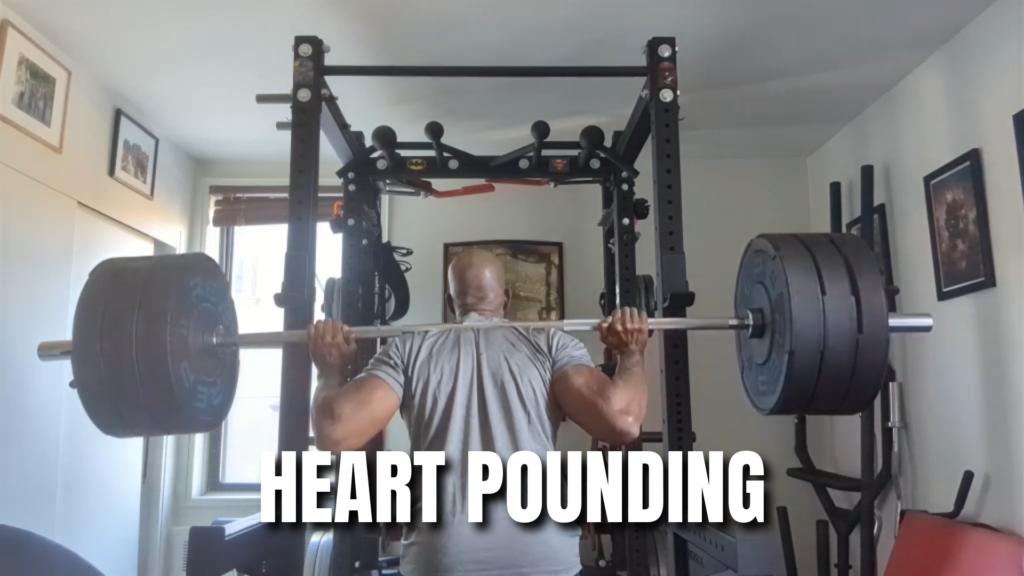
After a hard set of squats, your heart is pounding and you’re breathing hard. That happens throughout much of one of our workouts. In my experience, training this way improved my work capacity and helped some clients perform better in activities outside the gym.
Still, breathing hard during weights does not establish that a short lifting program provides every cardiovascular health benefit of a complete aerobic program. The American Heart Association recommends both aerobic activity and muscle-strengthening activity for general health. My question here is narrower: when maximum natural muscle growth is the priority, is an additional dedicated cardio workout helping this particular person?
What does the research say about cardio and lifting?
The research does not show that cardio automatically destroys muscle gains. A systematic review and meta-analysis of concurrent aerobic and strength training found no overall impairment in muscle hypertrophy or maximal strength compared with strength training alone, although explosive-strength gains were smaller in some comparisons. Another review examining continuous and interval endurance training found no significant difference in whole-muscle growth in the comparisons it analyzed, while some muscle-fiber outcomes varied with the type of endurance work.
Those findings matter. My coaching experience should not be presented as a universal scientific rule. It raises a practical question about a particular combination: very intense, low-volume lifting, extra steady-state sessions, and a lifter trying to maximize natural muscle development. Your response may differ.